Rhythm, spoken-word delivery, heavy beats, and street culture.
The fusion of rock and rap/hip-hop didn’t fully explode until the 1980s (like Run-D.M.C. and Aerosmith), but in the 1970s, several key rock musicians and bands helped lay the foundation for rap-rock and hip-hop-influenced rock by experimenting with rhythm, spoken-word delivery, heavy beats, and street culture.
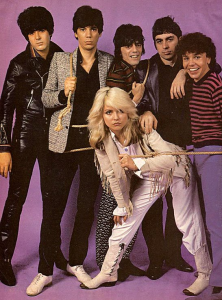
Blondie
Blondie played a pivotal role in bridging the gap between rock and the emerging hip hop scene of the late 1970s and early 1980s. Their 1981 hit “Rapture” was one of the first mainstream songs by a white artist to feature rapping, with Debbie Harry name-dropping hip hop pioneers like Fab Five Freddy and Grandmaster Flash. The song helped introduce rap to a broader, predominantly rock-listening audience and earned airtime on MTV at a time when few Black artists were featured. Blondie’s openness to genre fusion—mixing punk, disco, and rap—gave early hip hop a boost in credibility and visibility, showing that rap could blend with other styles and appeal to mainstream pop and rock fans alike.
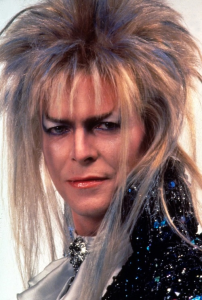
David Bowie
David Bowie influenced hip hop and rap music through his fearless experimentation, genre-blending, and embrace of Black musical traditions. His 1975 album Young Americans showcased a deep appreciation for soul and funk, styles that later formed the backbone of early hip hop beats. Bowie’s 1983 song “Let’s Dance,” produced by Nile Rodgers, also had a significant funk groove that inspired sampling by hip hop artists. Perhaps most importantly, Bowie was vocal about racial inequality in the music industry—famously challenging MTV for not playing enough Black artists. His collaboration with artists across genres and cultures encouraged a spirit of innovation in hip hop, and rappers like Jay-Z and Kendrick Lamar have cited him as an influence for pushing creative boundaries.
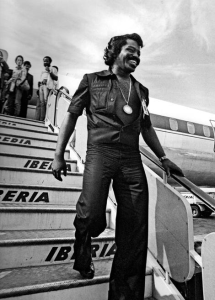
James Brown
James Brown is often called the “Godfather of Soul,” but his impact on hip hop and rap music is just as monumental. His tight, rhythmic grooves—especially the signature funk beats laid down by drummer Clyde Stubblefield—became some of the most heavily sampled sounds in hip hop history. Tracks like “Funky Drummer,” “The Payback,” and “Get Up (I Feel Like Being a) Sex Machine” provided the backbone for countless rap songs. Brown’s emphasis on rhythm, repetition, and raw energy laid the foundation for breakbeats, a core element in early DJing and b-boy culture. His commanding vocal style and call-and-response patterns also influenced MC techniques. Hip hop owes much of its sound, structure, and spirit to James Brown’s groundbreaking musical innovations.
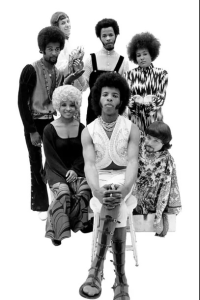
Sly and the Family Stone
Sly and the Family Stone significantly influenced hip hop and rap through their groundbreaking fusion of funk, soul, rock, and social commentary. Their deep, rhythmic grooves and innovative basslines—especially Larry Graham’s pioneering slap-bass technique—became a staple in hip hop sampling, heard in tracks by Public Enemy, Dr. Dre, and the Beastie Boys. The band’s message-driven lyrics addressing race, unity, and empowerment resonated with the themes later explored in rap. Songs like “Thank You (Falettinme Be Mice Elf Agin)” and “Family Affair” laid a foundation for funk’s rhythmic complexity, which hip hop producers would later build on. Sly’s genre-blending, multicultural lineup, and bold political voice helped pave the way for hip hop’s musical creativity and cultural activism.
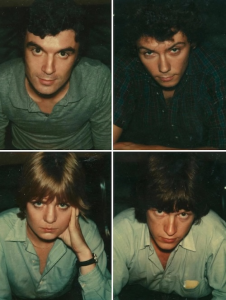
Talking Heads
The Talking Heads influenced hip hop and rap through their experimental approach to rhythm, sound, and genre fusion. While not a hip hop act, their embrace of funk, Afrobeat, and minimalist grooves—especially on albums like Remain in Light—resonated with early hip hop producers seeking fresh textures and rhythms. The band’s collaboration with producer Brian Eno resulted in layered, loop-based compositions that mirrored the sampling techniques used in hip hop. Their willingness to break traditional song structures and incorporate spoken-word elements foreshadowed rap’s lyrical style. Artists like Questlove and Kanye West have cited the Talking Heads as an influence, appreciating their boundary-pushing innovation and cultural commentary, which helped expand the creative possibilities for hip hop’s evolving soundscape.
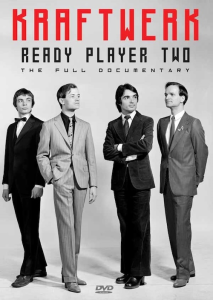
Kraftwerk
Kraftwerk, the German electronic pioneers, had a profound influence on hip hop and rap by shaping the sonic foundation of early electro and breakbeat music. Their minimalist, synth-driven tracks like “Trans-Europe Express” and “Numbers” were sampled and reimagined by trailblazing hip hop artists, most notably Afrika Bambaataa in his 1982 classic “Planet Rock.” Kraftwerk’s robotic beats and futuristic aesthetic gave early hip hop a new, electronic sound that fueled the rise of breakdancing and electro-funk. Their emphasis on rhythm, repetition, and technology inspired hip hop producers to experiment with drum machines and synthesizers. By merging man and machine, Kraftwerk unknowingly helped define the sound of an urban American genre developing worlds away from their Düsseldorf studio.
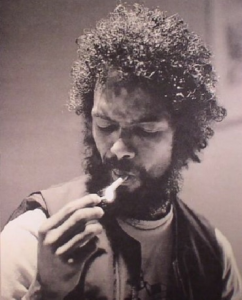
Gil Scott-Heron
Gil Scott-Heron is often considered a forefather of hip hop and rap due to his pioneering blend of spoken word poetry, jazz, and political commentary. His 1970 track “The Revolution Will Not Be Televised” laid the groundwork for rap’s lyrical style—rhythmic, confrontational, and socially conscious. Scott-Heron used his voice as a tool for protest, tackling racism, poverty, and media manipulation with sharp, poetic intensity. His influence can be heard in the work of artists like Public Enemy, KRS-One, and Kendrick Lamar, who carry on his tradition of using music as a platform for activism. By fusing message-driven storytelling with groove-based backing tracks, Gil Scott-Heron helped shape the intellectual and emotional core of hip hop culture.
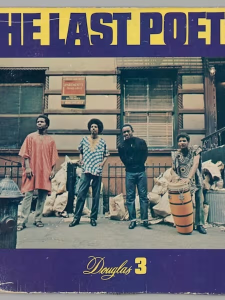
The Last Poets
The Last Poets were instrumental in shaping the foundation of hip hop and rap through their revolutionary blend of rhythmic spoken word, Afrocentric themes, and political protest. Emerging in the late 1960s, they delivered powerful poetry over conga-driven beats, addressing issues like systemic racism, Black identity, and social injustice—topics that would become central to conscious rap. Their raw, percussive vocal delivery laid the groundwork for the cadence and urgency found in rap lyricism. Influencing artists like Public Enemy, KRS-One, and Nas, The Last Poets demonstrated that poetry could be both militant and musical. Their fearless voice and street-level perspective became a blueprint for hip hop’s use of language as a weapon for truth, resistance, and empowerment.
George Clinton / Parliment-Funkadelic
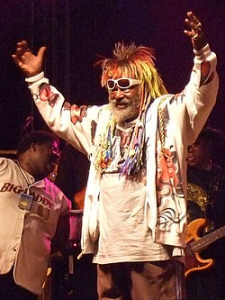
George Clinton, the mastermind behind Parliament-Funkadelic, had a massive impact on hip hop and rap music through his futuristic funk sound, wild persona, and innovative production. His deep grooves, layered rhythms, and psychedelic style became a goldmine for sampling—especially during the rise of West Coast hip hop in the 1990s. Artists like Dr. Dre, Snoop Dogg, Ice Cube, and Digital Underground heavily sampled Clinton’s tracks, such as “Atomic Dog” and “Flash Light,” helping to create the signature G-funk sound. Beyond the music, Clinton’s cosmic themes, humor, and social commentary inspired rappers to explore creativity without boundaries. His fusion of funk, freedom, and Afrofuturism laid the foundation for hip hop’s sonic diversity and cultural expression.
War
The band War had a significant influence on hip hop and rap through their infectious blend of funk, Latin, jazz, and rock rhythms paired with socially conscious lyrics. Their grooves—tight, rhythmic, and laid-back—became popular among hip hop producers for sampling, with tracks like “Low Rider,” “Slippin’ Into Darkness,” and “The World Is a Ghetto” appearing in songs by Cypress Hill, Beastie Boys, and De La Soul. War’s streetwise storytelling and multicultural sound reflected the urban experience that hip hop would later amplify. Their music offered both gritty realism and uplifting grooves, creating a blueprint for hip hop’s dual role as social commentary and party soundtrack. War’s genre-blending style helped expand hip hop’s musical vocabulary and cultural reach.
Miles Davis
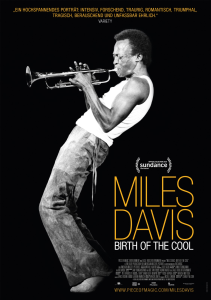
Miles Davis influenced hip hop and rap by pioneering musical innovation and pushing genre boundaries, inspiring producers and artists to experiment with sound. His use of improvisation, modal jazz, and fusion in albums like Bitches Brew introduced complex rhythms and atmospheric textures that hip hop producers sampled and emulated. Davis’s fearless creativity encouraged rappers and beatmakers to blend jazz elements with beats, contributing to the rise of jazz rap in the 1990s with artists like A Tribe Called Quest and Guru. His cool, edgy persona and constant reinvention also resonated with hip hop’s spirit of originality and self-expression. By bridging jazz with contemporary sounds, Miles Davis helped shape hip hop’s sonic diversity and artistic depth.