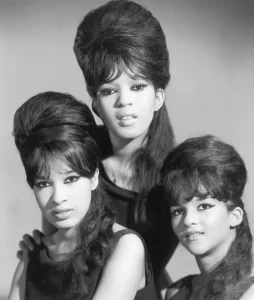
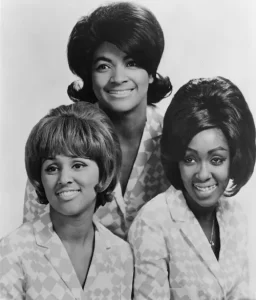
The Ronettes played a pivotal role in shaping and showcasing the 1960s Wall of Sound, the groundbreaking production technique developed by Phil Spector. Their 1963 hit “Be My Baby” became the quintessential example of this lush, echo-drenched style, layering orchestration, percussion, and vocal harmonies into a grand, emotional experience. Ronnie Spector’s powerful, emotive voice cut through the dense arrangement, creating a dramatic and unforgettable effect that helped define the Wall of Sound’s emotional core. The Ronettes’ success demonstrated how Spector’s production could turn a girl group into a musical force, influencing countless artists from The Beach Boys to Bruce Springsteen. Without the Ronettes, the Wall of Sound might have lacked its signature voice and cultural impact.
The Crystals
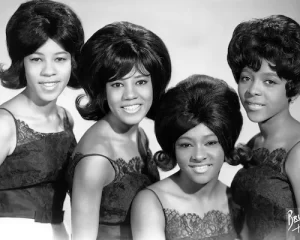
The Crystals were among the first groups to bring Phil Spector’s Wall of Sound to national attention, helping to define its dramatic and layered production style. Hits like “Then He Kissed Me” and “Da Doo Ron Ron” showcased Spector’s signature technique: dense arrangements filled with echo, percussion, strings, and overlapping vocals that created a rich, orchestral feel. The Crystals’ youthful energy and emotional delivery gave life to Spector’s vision, blending teenage innocence with sonic grandeur. Their recordings helped prove that pop songs could be mini-symphonies, and their success paved the way for other girl groups—like the Ronettes—to follow. As one of the original vehicles for the Wall of Sound, the Crystals were essential to its early development and enduring legacy.
Darlene Love
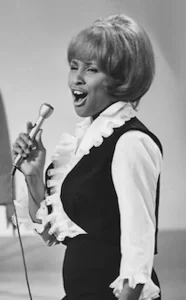
Darlene Love was a key architect of the Wall of Sound, lending her powerhouse vocals to many of Phil Spector’s most iconic productions. Though often uncredited, she sang lead on hits like “He’s a Rebel” and “(Today I Met) The Boy I’m Gonna Marry,” both prime examples of the Wall of Sound’s emotional intensity and layered orchestration. Love’s voice had the strength to rise above Spector’s dense arrangements, giving his productions both clarity and soul. Her dynamic vocal style brought depth to the Wall of Sound, proving that raw, gospel-influenced emotion could thrive within the elaborate studio technique. Without Darlene Love’s commanding presence and vocal versatility, the Wall of Sound may have lacked its essential human connection and dramatic flair.
The Righteous Brothers
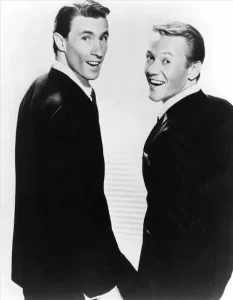
The Righteous Brothers brought a new emotional depth to Phil Spector’s Wall of Sound, expanding its reach beyond girl groups into blue-eyed soul. With their 1965 classic “You’ve Lost That Lovin’ Feelin’,” Spector crafted one of the most iconic Wall of Sound productions, layering strings, percussion, and echo to create a sweeping, almost cinematic feel. Bill Medley’s deep baritone and Bobby Hatfield’s soaring tenor gave the song a dramatic tension that matched Spector’s dense arrangements perfectly. Their powerful vocals cut through the wall of instrumentation, proving that the Wall of Sound could amplify male emotion just as effectively. The Righteous Brothers helped the technique evolve, showing that it could serve adult themes and soulful expression, not just teen romance.
The Blossoms
The Blossoms, led by the powerful voice of Darlene Love, were instrumental in bringing the Wall of Sound to life, even if they were often hidden behind other group names. As one of Phil Spector’s go-to vocal groups, they provided background and sometimes lead vocals on key Wall of Sound recordings, including hits like “He’s a Rebel” (credited to the Crystals) and “Zip-a-Dee-Doo-Dah.” Their tight harmonies and studio precision helped shape the lush vocal textures that defined the Wall of Sound. The Blossoms’ versatility and vocal strength allowed Spector to experiment with layers of sound, knowing he could rely on their consistency and emotion. Their behind-the-scenes contributions were crucial in building the rich sonic foundation of Spector’s groundbreaking style.
Ike & Tina Turner
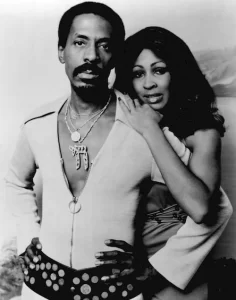
Ike and Tina Turner brought raw power and intensity to the Wall of Sound, pushing its emotional and sonic boundaries. Their 1966 single “River Deep – Mountain High,” produced by Phil Spector, was one of the most ambitious Wall of Sound productions ever attempted. While Ike took a backseat during the recording, Tina’s fiery, impassioned vocals became the centerpiece of Spector’s dense orchestration—featuring massive string sections, booming percussion, and a choir of background singers. Tina’s voice cut through the thick mix with unmatched force, demonstrating how the Wall of Sound could amplify not just romance, but deep soul and passion. Though the song was more successful in the UK than in the U.S., it remains a towering example of the Wall of Sound’s full dramatic potential.
Bob B. Soxx & the Blue Jeans
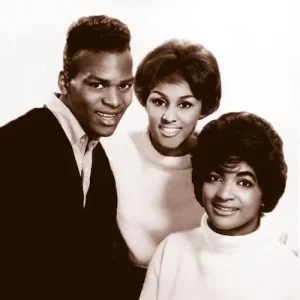
Bob B. Soxx and the Blue Jeans were an early and essential part of Phil Spector’s Wall of Sound experiment, helping to define the style’s energetic and orchestral approach to pop music. With hits like “Zip-a-Dee-Doo-Dah” and “Why Do Lovers Break Each Other’s Hearts,” the group showcased Spector’s signature layering of instruments, echo, and backing vocals. Featuring the powerful lead vocals of Darlene Love, their recordings balanced playful charm with rich, full arrangements that pushed pop music into new, more dramatic territory. As one of Spector’s first successful acts under Philles Records, they proved the viability of the Wall of Sound and set the template for future hits. Their contributions helped solidify the technique’s ability to elevate even simple melodies into grand musical statements.
Philles Records – Phil Spector’s label home for most Wall of Sound releases.
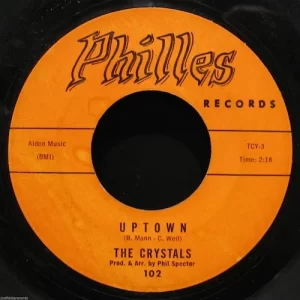
Philles Records, founded by Phil Spector in 1961, was the central hub for the creation and release of Wall of Sound masterpieces throughout the 1960s. As Spector’s personal label, it gave him total creative control—allowing him to experiment freely with massive orchestral arrangements, layered instrumentation, and echo-heavy studio techniques. Through Philles, he released iconic hits by The Ronettes, The Crystals, Bob B. Soxx and the Blue Jeans, and The Righteous Brothers, all showcasing the Wall of Sound’s grandeur. The label’s streamlined structure let Spector work closely with artists, songwriters, and engineers to craft each recording as a sonic event. Philles Records wasn’t just a business—it was the engine that powered the Wall of Sound and helped revolutionize pop music production.
Leonard Cohen
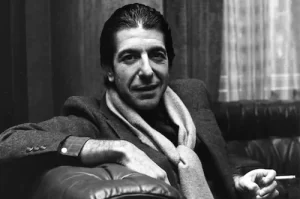
While Leonard Cohen was not directly involved in the creation of the 1960s Wall of Sound, he became connected to it later through his collaboration with Phil Spector on the 1977 album Death of a Ladies’ Man. This album marked a dramatic departure from Cohen’s usual sparse, acoustic style, as Spector applied his Wall of Sound technique—layered instrumentation, dense production, and echo effects—to Cohen’s poetic lyrics and somber voice. Though controversial among fans and critics, the project showed how the Wall of Sound could be applied outside of pop and soul, influencing even introspective singer-songwriters. While Cohen didn’t shape the Wall of Sound in the 1960s, his later work with Spector reflected its enduring reach and experimental potential in different genres.
The Beach Boys
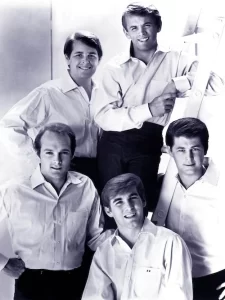
The Beach Boys were heavily influenced by Phil Spector’s Wall of Sound, especially Brian Wilson, who admired Spector’s dense, layered production style. Wilson sought to emulate and expand on this approach in the mid-1960s, using complex vocal harmonies, rich orchestration, and innovative studio techniques to create his own “California sound.” Albums like Pet Sounds showcased how the Wall of Sound inspired Wilson to push pop music into new artistic territory, blending lush arrangements with emotional depth. Although not directly part of Spector’s circle, The Beach Boys helped popularize and evolve the Wall of Sound’s principles, proving its impact beyond the girl group genre and influencing countless musicians in rock and pop music worldwide.